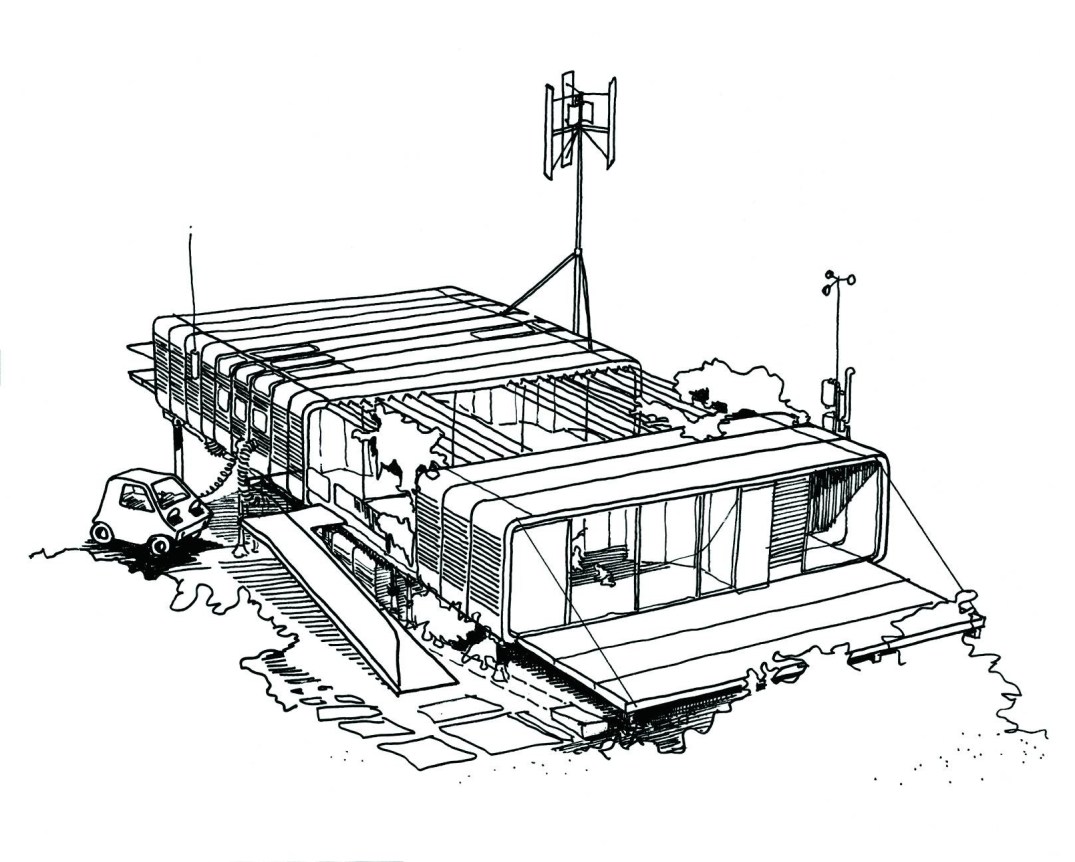
Sketch Image by Richard Rogers
The Zip-Up House was a radical concept of its time when Richard Rogers first conceived it in 1967. Many would know Richard Rogers for his part in the renowned Centre Pompidou in Paris, but not many know what its predecessor was and the concept that drove towards the projects success. The Zip-Up House was an experiment of how dwellings in the modern age could be easily customizable and adapt to the owners needs and surroundings. Rogers’s interest of adaptable, affordable housing has always been a part of his practice for the past three decades of practice. The notion of adaptability and energy efficiency was not only limited to the residential but could be applied to the commercial and public realm as well. In some early renderings, Richard Rogers envisioned electric plug in cars and wind-powered energy, which now can be seen everywhere in modern times. Even though it was never built, it lead to a whole new perspective and it has made its mark on his future projects. The Zip-Up House paved the way for Richard Rogers’s future projects where traces of the Zip-Up House can be seen either in ways of spatial concept, materiality, or modularity.


For my thesis project, I will be analyzing the weaknesses of the Zip-up House and design my interpretation of it for modern times.
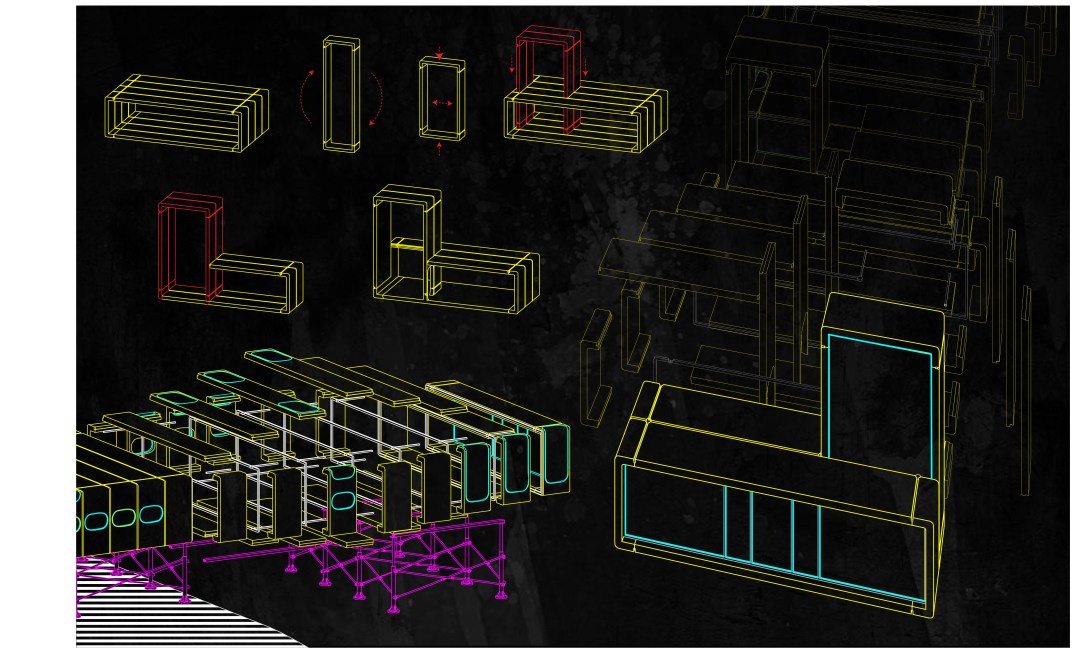
For my report on this project, you can read it here: Expanding the Modular
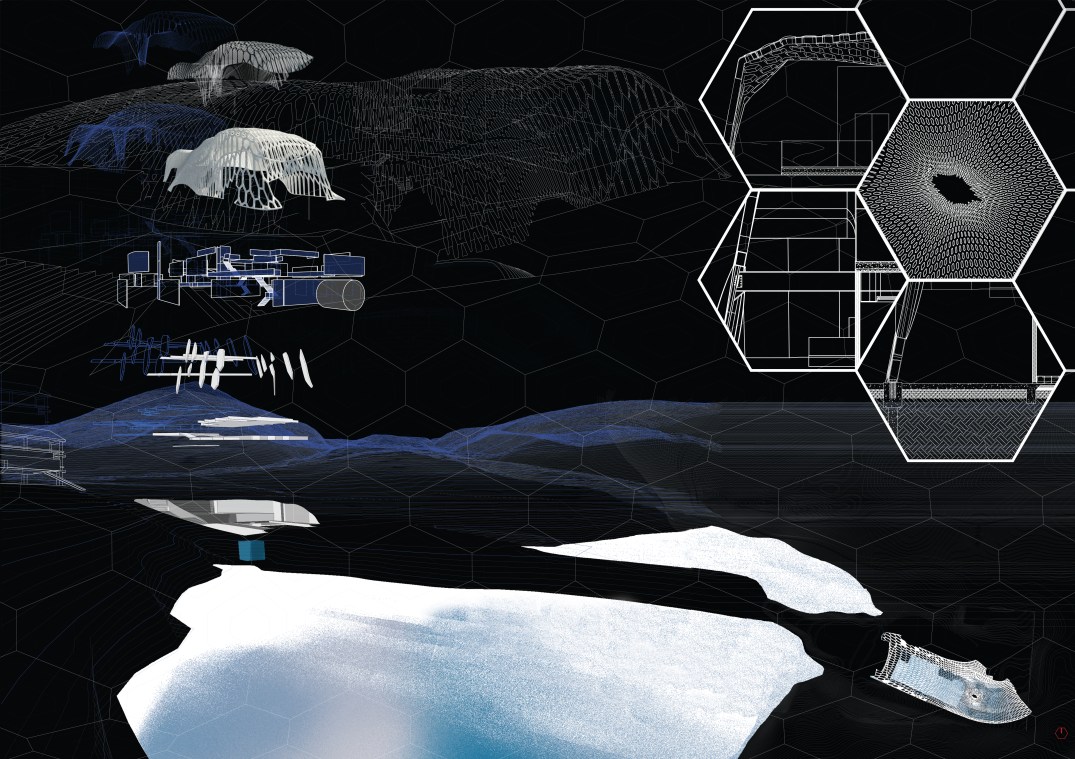 (Image does not do the line weights justice)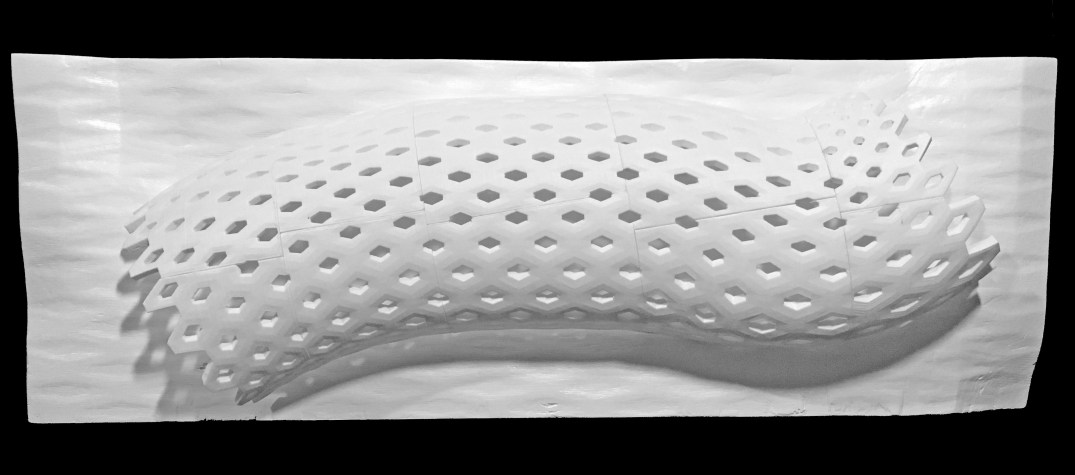










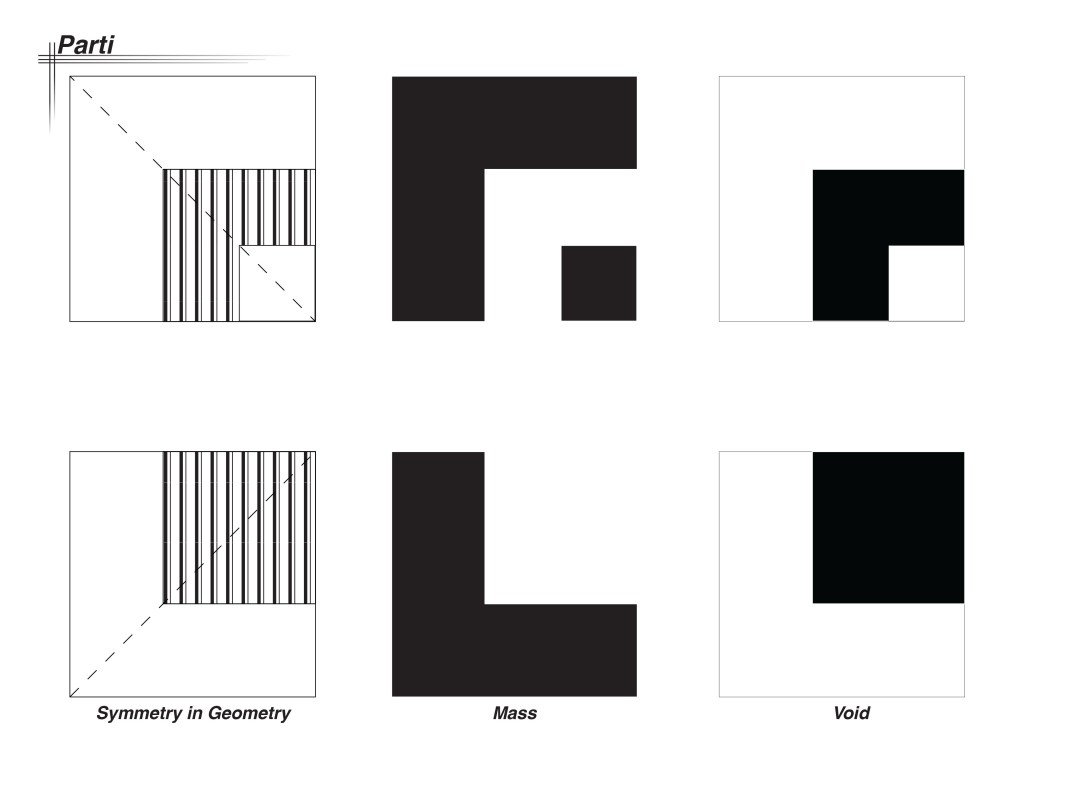


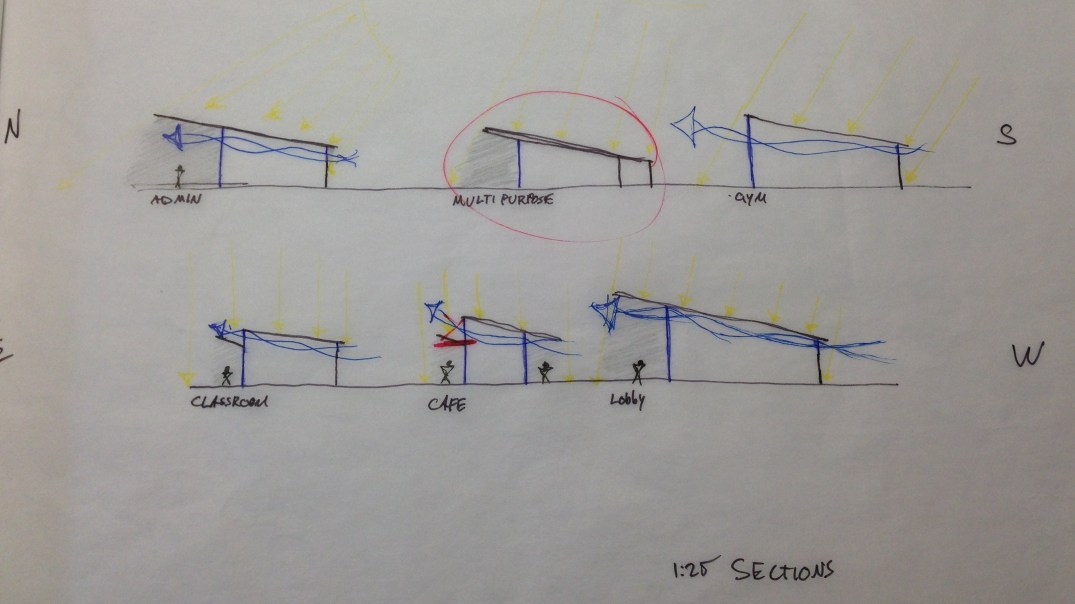


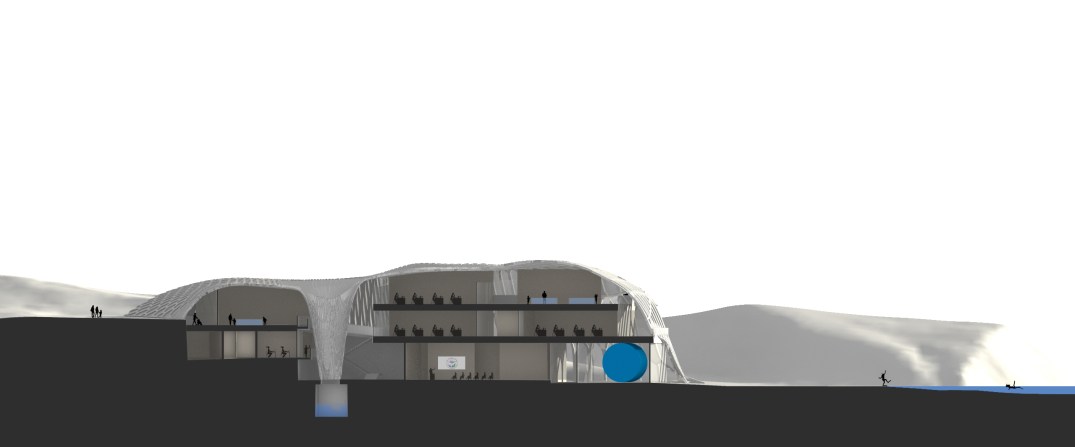
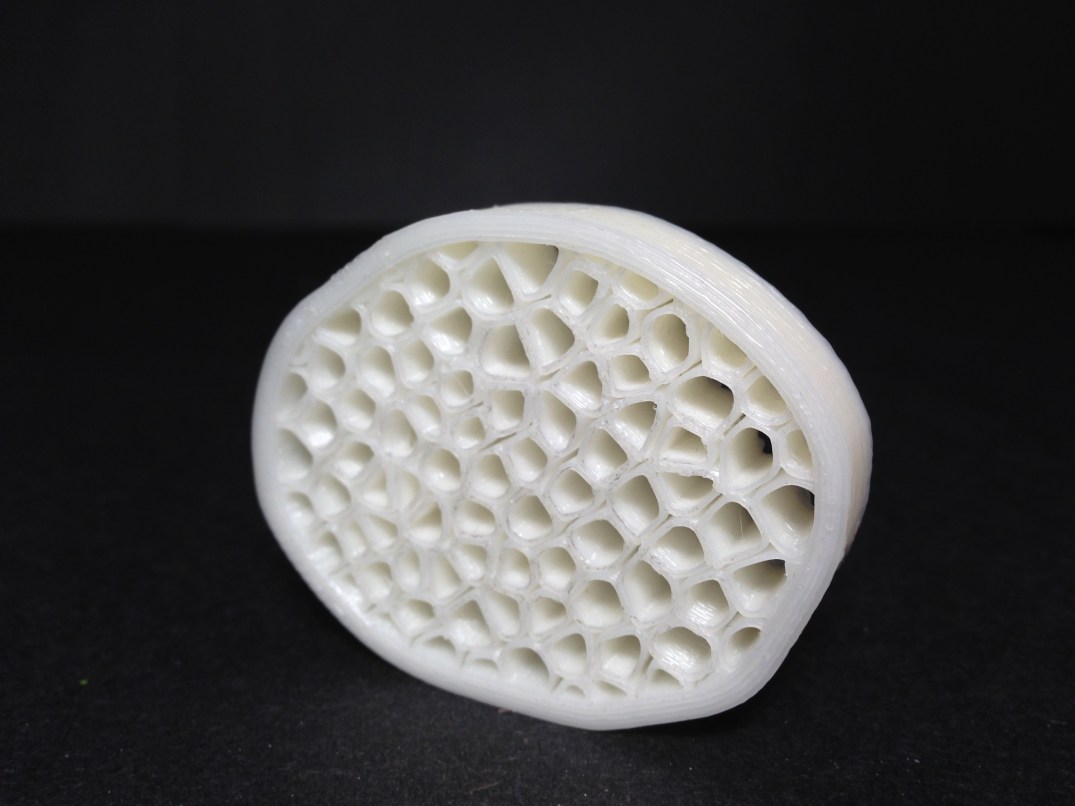
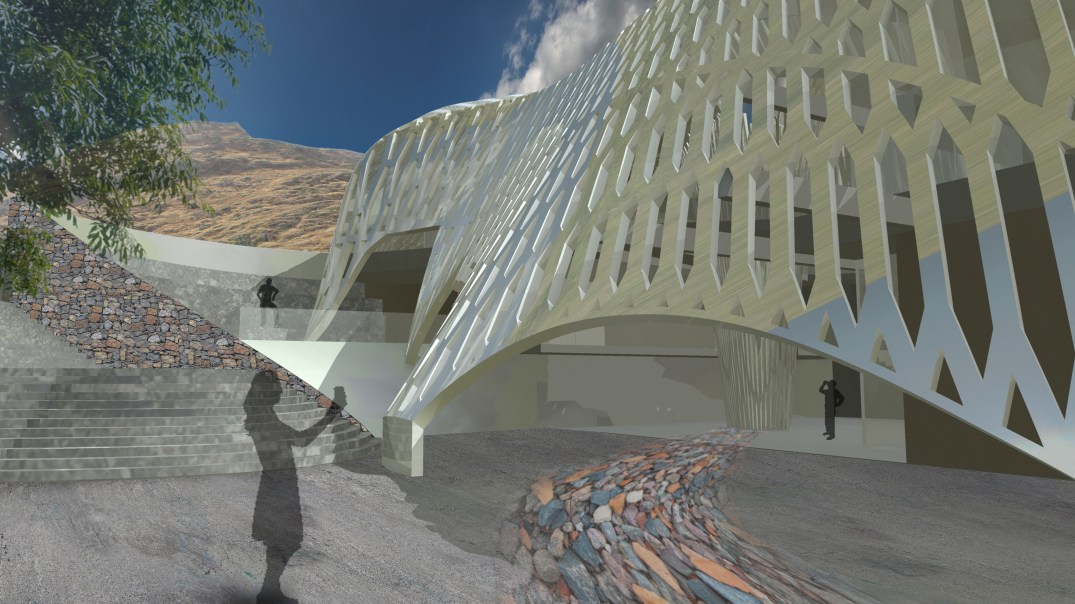 The institute must be an educator itself by demonstrating alternatives to sustainable strategies, alternative design, and technology. The future of the Center for Advanced Environmental Study needs to have a strong connection between the inhabitants and the surrounding context views. It is to help the two engage each other physically so that both may benefit from one another and to be proformative and inspirational. It must celebrate the island context as well as the dedicated researchers who inhabit this environment. Creating a social hub that withdraws the stress and returns to a simple tranquility, which is the land itself. Throughout the campus, there is a water collection system that will collect the rain runoff of the roof and the exterior spaces into a cistern located in the main lobby of the institute. The buildings facade is also acts as the structure and an example of future facade systems using ETFE. The structure is inspired by the variable density of a bone structure and uses this effect to control the amount of direct sunlight that enters yet allowing indirect light to limit artificial lighting. Natural ventilation is also utilized on the upper levels with operable partitions that allow the westward wind to naturally ventilate the building.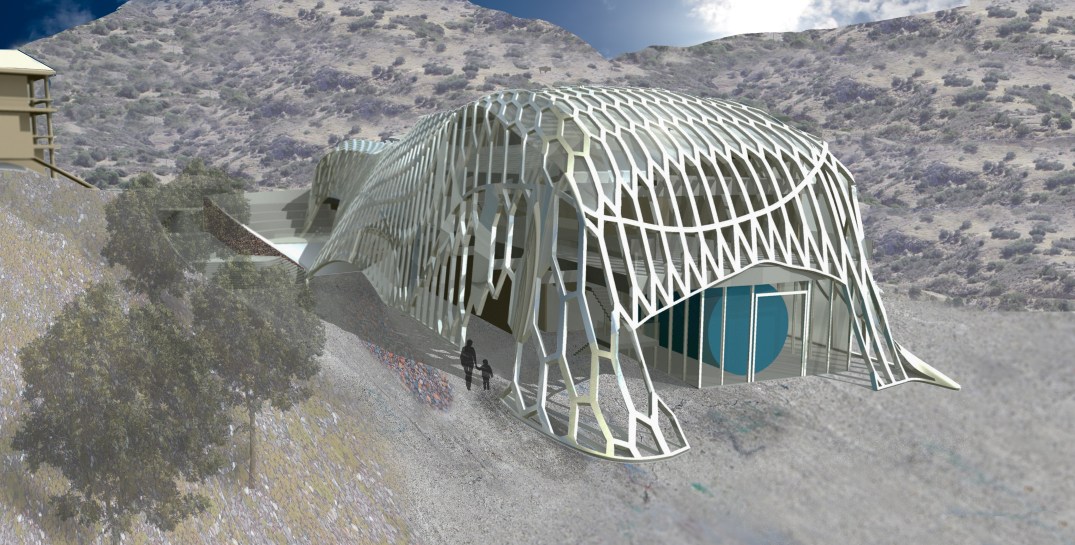


 ArcHieu